Union Steamships
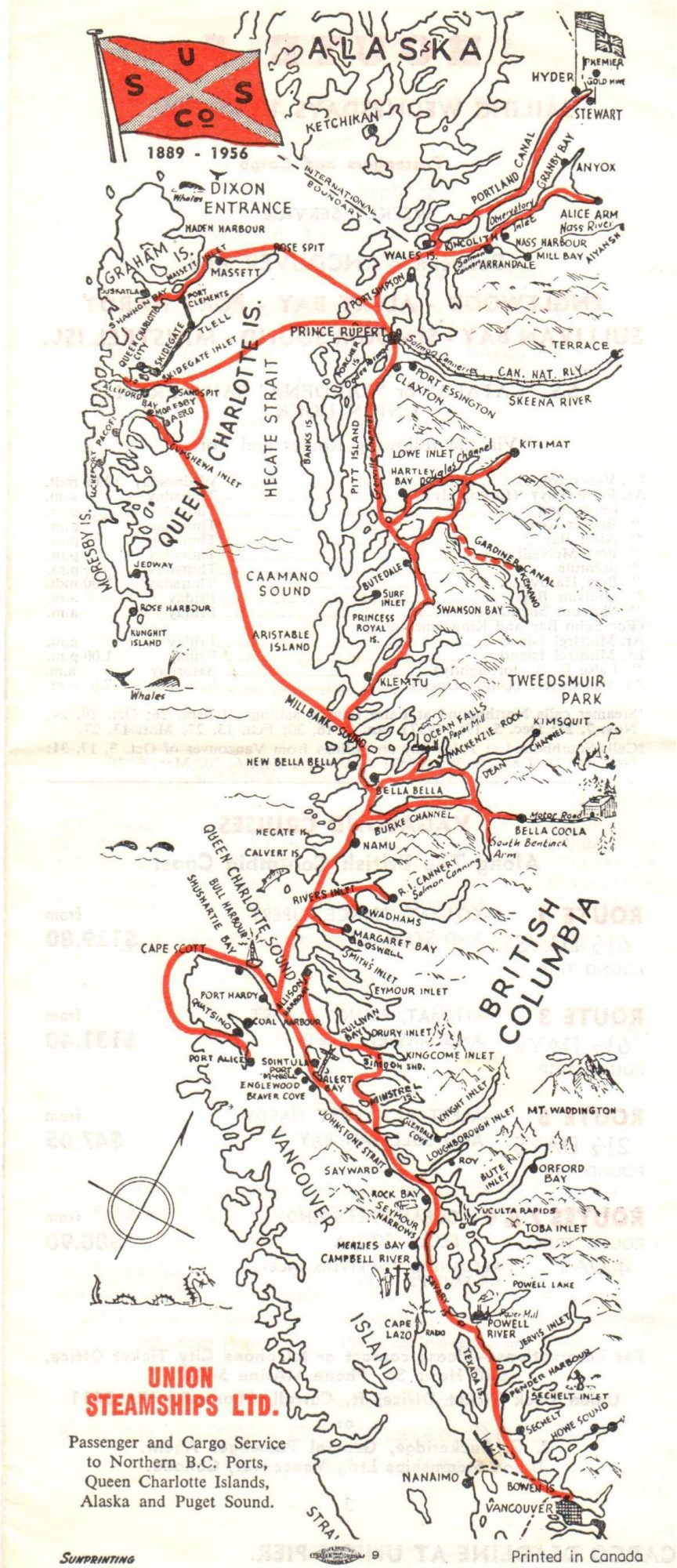
Steamships connected Bowen Island to communities throughout the coast of British Columbia. Just as the Union Steamship Company helped shape Bowen's development as a resort destination, coastal steamship routes carried people, goods, mail, and supplies between settlements throughout Átl’ḵa7tsem / Howe Sound and beyond.
Many of these communities grew around resource industries. Japanese immigrants and Japanese Canadians found work in fishing, logging, sawmills, farming, and related industries, establishing lives and communities in places such as Woodfibre and Port Essington.
These were not simply places of work. Families made homes, children went to school, businesses operated, and social and community networks developed around the industries that sustained them.
Communities Disrupted
The forced removal of Japanese Canadians from the coast beginning in 1942 profoundly affected both the people who were uprooted and the communities and industries in which they had lived and worked.
The scale of Japanese Canadian participation in British Columbia’s resource economy can be seen in industries such as sawmilling. In 1931, 23% of sawmill workers in British Columbia were recorded as being of Asian descent. By 1951, that figure had fallen to just 1%.
Behind those numbers were individuals and families whose lives were closely connected to the places where they lived and worked.
When Japanese Canadians were forcibly removed, homes were emptied, neighbours disappeared, and established communities were broken apart. The effects were felt not only by those who were uprooted, but also by the coastal towns and industries of which they had been a part.
Britannia Mine
Britannia Mine was established on the unceded territory of the Sḵwx̱wú7mesh Nation. Japanese workers were part of the mine community from its early years.
British Columbia's mining laws restricted the work available to Asian labourers. Legislation introduced in the late nineteenth century prohibited Japanese and Chinese workers from working underground and operating certain machinery. Japanese workers nevertheless continued to find employment at Britannia, particularly in the mill where copper ore was processed.
One of the jobs performed largely by Japanese workers was hand sorting. Workers separated waste rock from copper-bearing ore by hand before it continued through the milling process.
It was physically demanding work and among the lowest-paid jobs at the operation.
By 1940, approximately 40 Japanese workers were employed at Britannia. Workers and their families lived in segregated housing at the mine site and in the neighbouring community of Britannia Beach.The Japanese Canadian community at Britannia came to an abrupt end in 1942.
The last families were forcibly removed on May 8, 1942.
Research using the Landscapes of Injustice database has identified 72 individuals connected to Britannia and Britannia Beach who were forcibly removed and subsequently displaced or incarcerated.
Their removal ended decades of Japanese participation in the life and work of the Britannia community.
Woodfibre

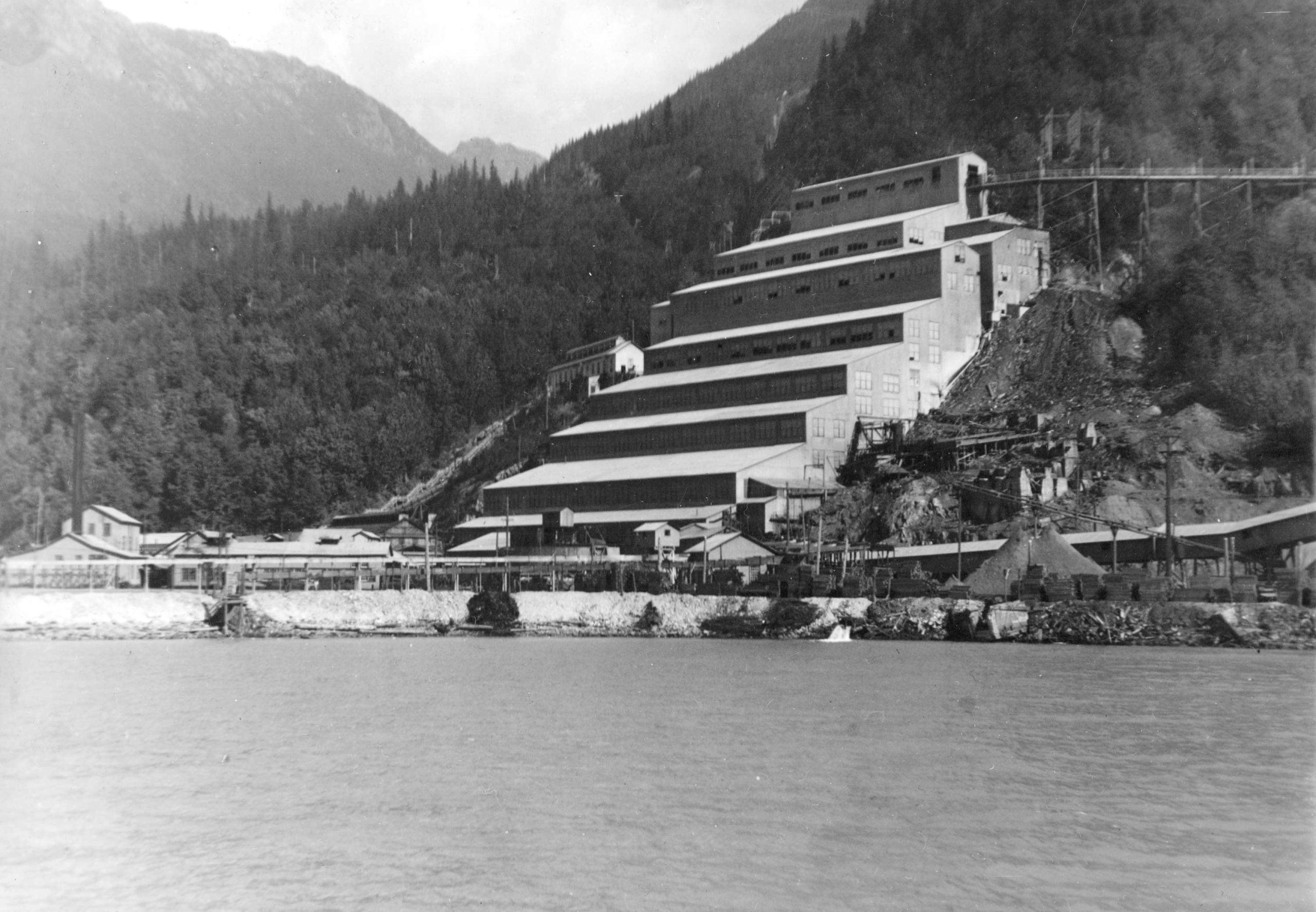
The mill at WoodFibre was built around 1912 at the site of Swiy̓át, a historical Sk̲wx̲wú7mesh nation village in the west of Howe Sound. Japanese workers arrived at Woodfibre during the First World War; in 1918, there were 59 Japanese workers.
In 1940, the town's population was around one thousand, with 200 being Nikkei. Like in many other industrial towns, the jobs and housing were segregated into “Japan towns” with separate communities from the white workers and their families.
Former residents remembered an idyllic life before the war with dances, New Year's parties and community events with the entire town participating. There was a Japanese language school and a Buddhist temple. There were even regular baseball games, with their own B.C Pulp team, and it was not uncommon to see people engaging in various hobbies on their rare time off.
The New Canadian wrote in May, 1942:
“Woodfiber B.C, May 6th - The Howe Sound area, including the pulp and paper mill of Woodfibre and the mining venture at Britannia, was cleared today of all persons of Japanese origin. The Union Steamship S.S. Lady Cynthia was due to arrive in Vancouver about 7 p.m. with 250 evacuees, completing the evacuation of the entire coast, except from Vancouver and district and the Fraser Valley. Registration of families was carried out while the people were still in their homes.”
Landscapes of injustice was able to identify 301 individuals who were incarcerated, one of whom, Masao Ide, was sent to a P.O.W. camp in Ontario for resisting or protesting incarceration.
Port Essington and Skeena river
The first people to settle in Port Essington were the local Indigenous Tsimshian peoples, who had a permanent settlement called Spoksuut, used in the autumn, which became a trading post until a large number from the community were forcibly resettled in the 1860s.
The first pre-emption for the land was in 1871, shortly followed by the canneries, which were built in the 1880s. The canneries were the Balmoral, Classier, Claxton and Standard canneries.
The first Japanese people came to the Skeena River in the 1890s. Shortly after that initial group, many Nikkei came to work in the canneries and fish the river. Many people also chose to fish here in the high season, then return to Vancouver or elsewhere. In 1934, there were 811 Japanese fishermen on the Skeena.
The town's economic peak was from 1900-1920, when there were hotels, businesses, a Japanese-language and English school, churches, and a Buddhist temple. It was the largest Nikkei population north of Vancouver. There was a bustling port town with shops, hotels, a Japanese language school, Methodist church and a Buddhist temple.
The entire town burned down in the 60s, so records are difficult to find. Still, some estimate the town had a population of 500 permanent residents, and that number could double or triple during the summer fishing months, when seasonal workers would come to the town for work.
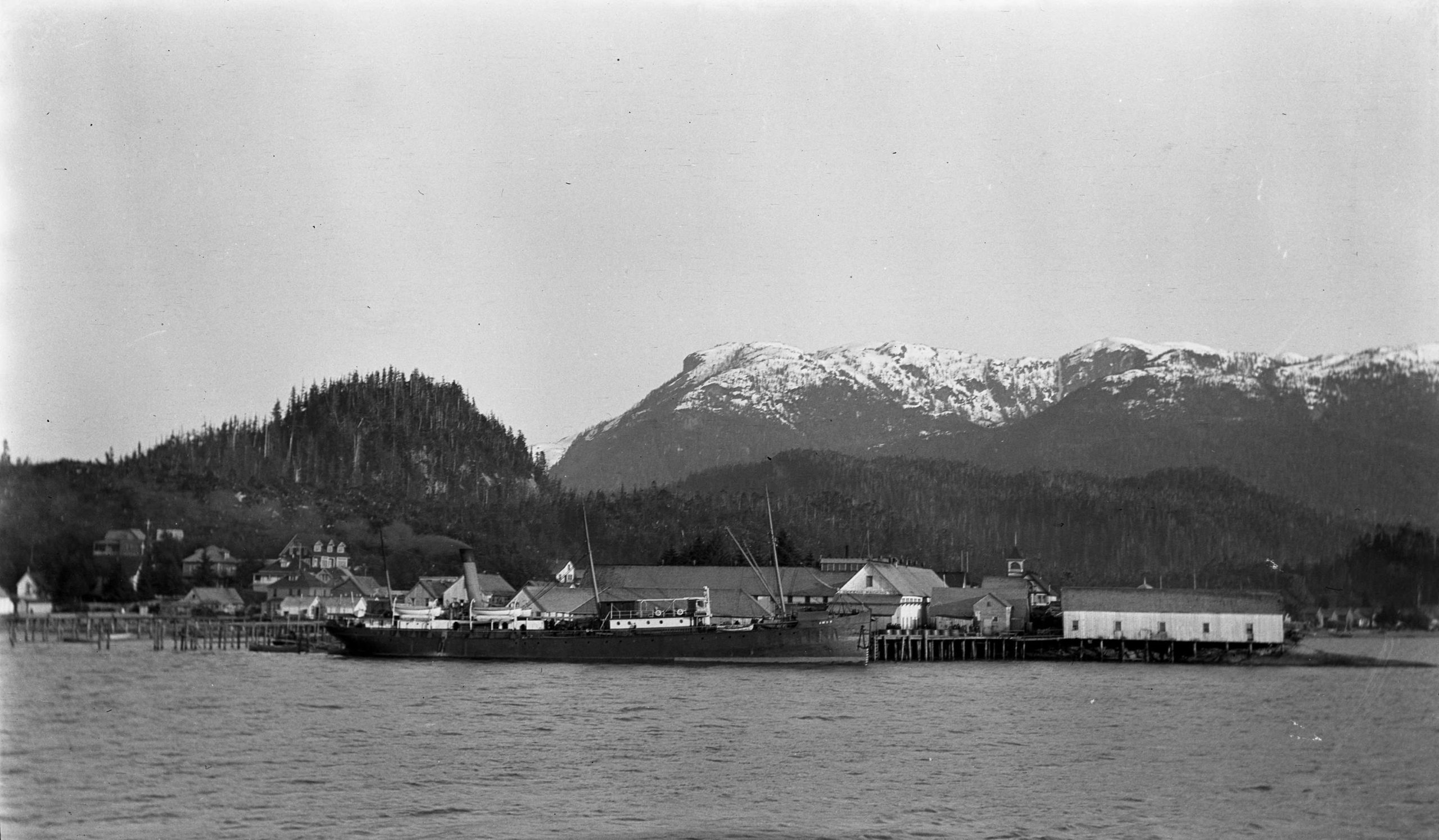
The area of B.C close to Prince Rupert was deemed strategically valuable by the Canadian and American governments. Due to location closely boarding the states and the possibility of a Japanese maneuver through Alaskan islands the government deemed Prince Rupert and surrounding areas as strategically vital. Canada and the United States discussed Prince Rupert's vital location as a means for a military base as early as 1937. There were two relocations of those of Japanese descent in Prince Rupert area. The first was when parts of the outskirts of town were demolished to make way for military installations. Construction by the US Engineers began on March 16, 1942, four days before Nikkei were removed from Prince Rupert.
“Removal from the important Skeena area begins March 20, when over 600 people will leave by Canadian National from Prince Rupert, across northern B.C. to the main line, and thence south to Vancouver.” – 1942, new Canadian
Landscapes of injustice found 393 people from the Port Essington and Skeena River area who were uprooted, and the New Canadian states 109 people specifically from Port Essington. Before the incarceration of the Nikkei community, Port Essington was already in decline, with the fishing population not what it once was and the town burning down in the 60s; it is now a ghost town.
Ocean Falls
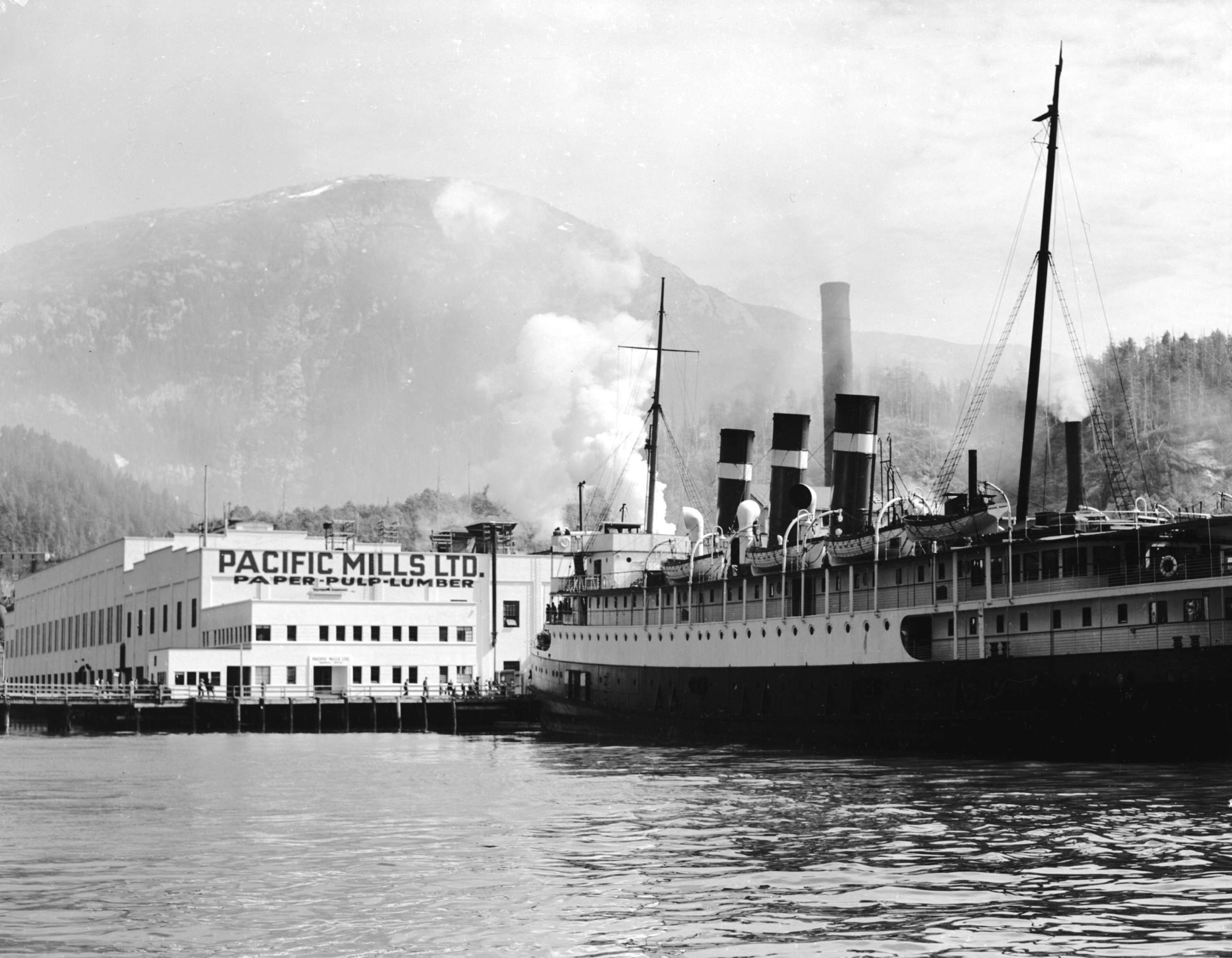
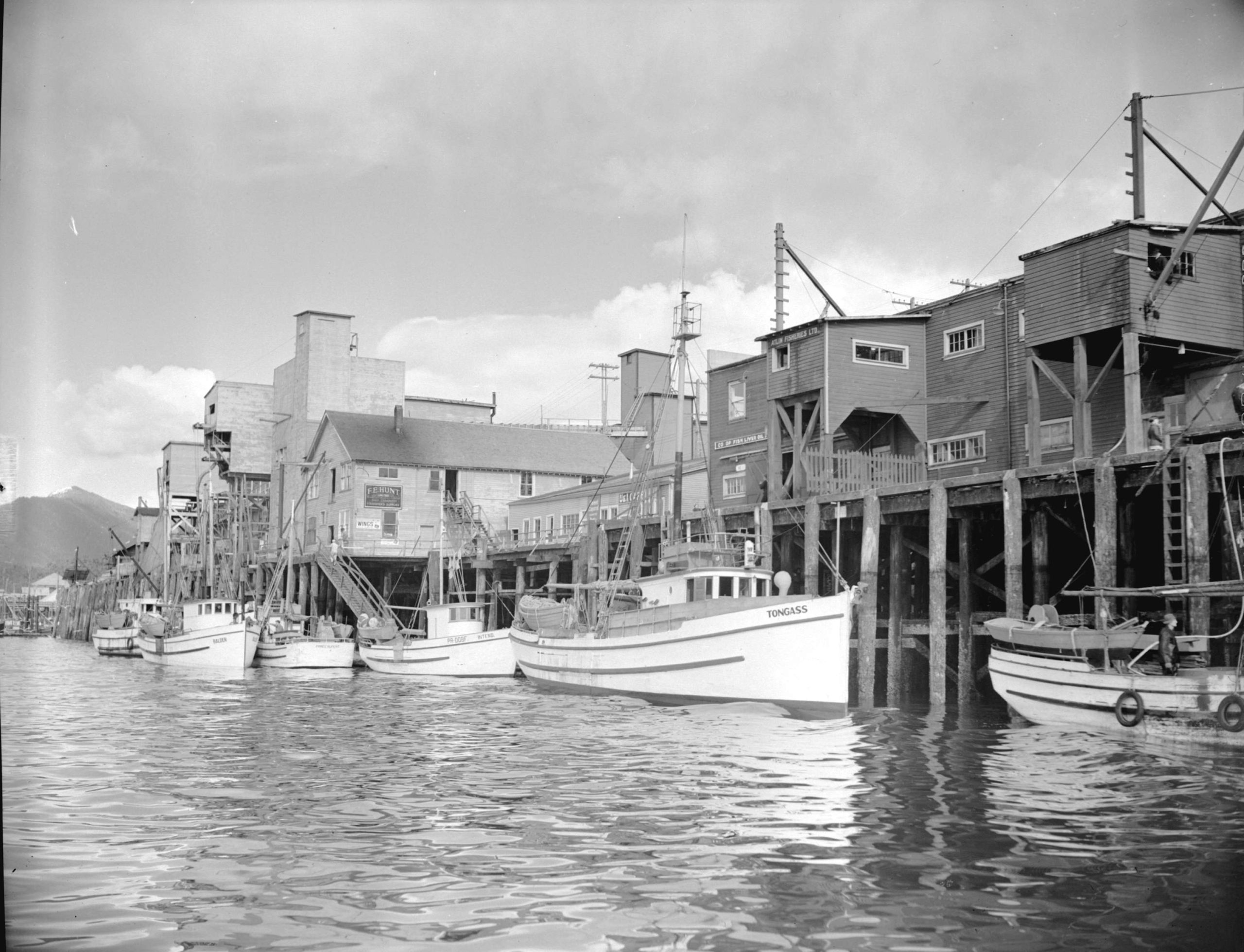
The first inhabitants of what is now Ocean Falls were the Kwakwa (Kwakiutl) and the Nuxalk (Bella Coola) First Nations, who called their seasonal village “Liak,” or falls. Ocean Falls was established in 1906 when construction of the mill began, with the sawmill beginning operation in 1910.
The pulp mill began production in 1912, and a paper mill in 1917. The First World War created great demand, which was filled by Japanese workers, and by 1917 the mill had a population of 1,500 workers, 350 of whom were Japanese. The population of Japanese workers was significant enough for there to be a union branch, 312, of the International Brotherhood of Pulp, Sulphite, and Mill Workers. By 1940, there were 200 Japanese workers, and a firsthand account stated that the population of Japanese inhabitants was approximately 400.
Landscapes of injustice was able to identify 337 people from Ocean Falls and surrounding towns who were incarcerated. Ocean Falls' population was approximately 2,000 at this point. There are no records of Japanese people returning after the war, and mills were forced to shut down due to a shortage of workers. Today, the town is known for its small population, but it has significant historical places such as the Japanese cemetery.