

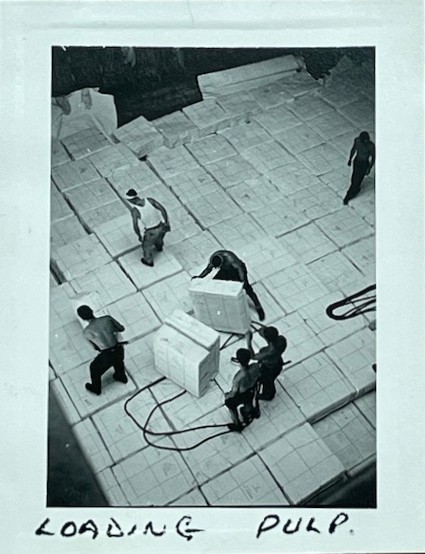
life at woodfibre
Jerry Kazumi Ito was born on Salt Spring Island in 1919, where his parents operated a chicken farm. He attended school through Grade Five before leaving to work in the family business.
In 1936, at the age of sixteen, Ito left home for Woodfibre, where he found work at the pulp mill. He remembered arriving to rows of small, one-room bunkhouses, each shared by two men. Housing was segregated, with Japanese workers housed separately from white workers.
Ito worked in the flume and woodchipper room. He recalled that Japanese workers were paid less than their white counterparts, a disparity that, at the time, he simply accepted:
“We just accepted it and were happy. Those were the days…”
A new skill
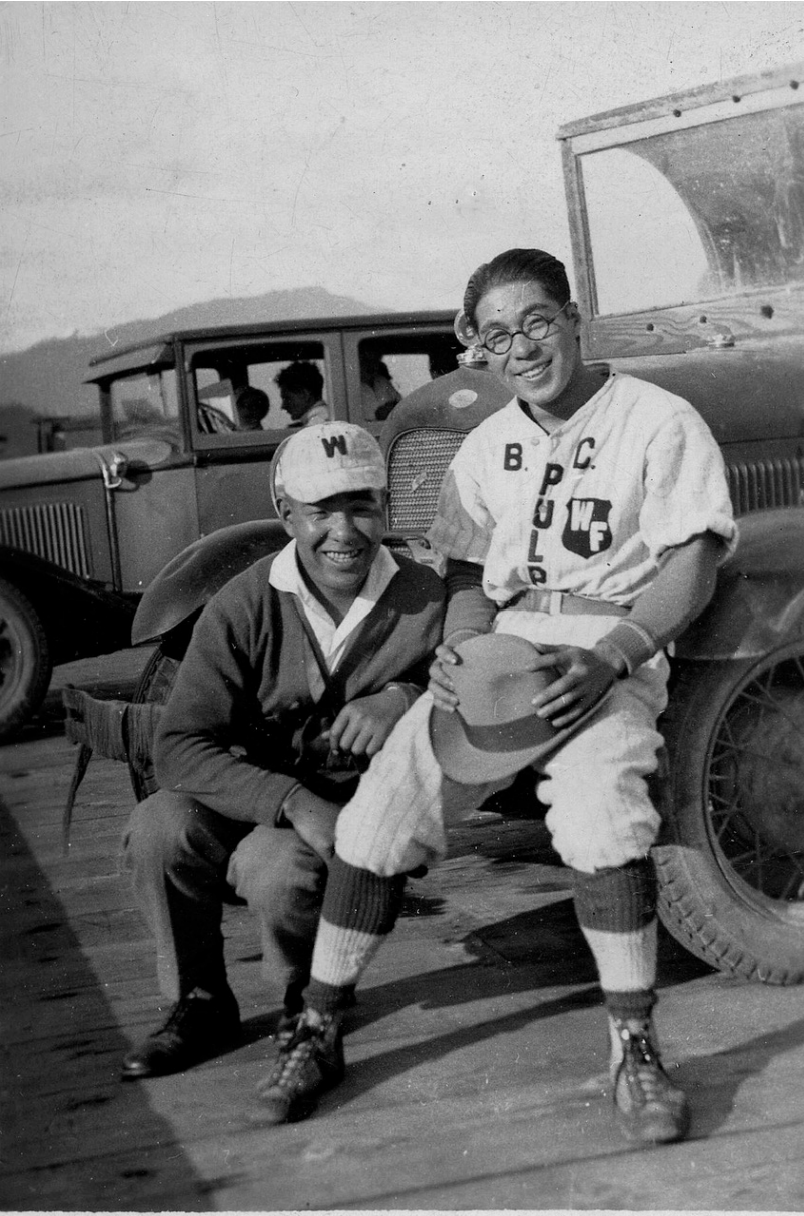
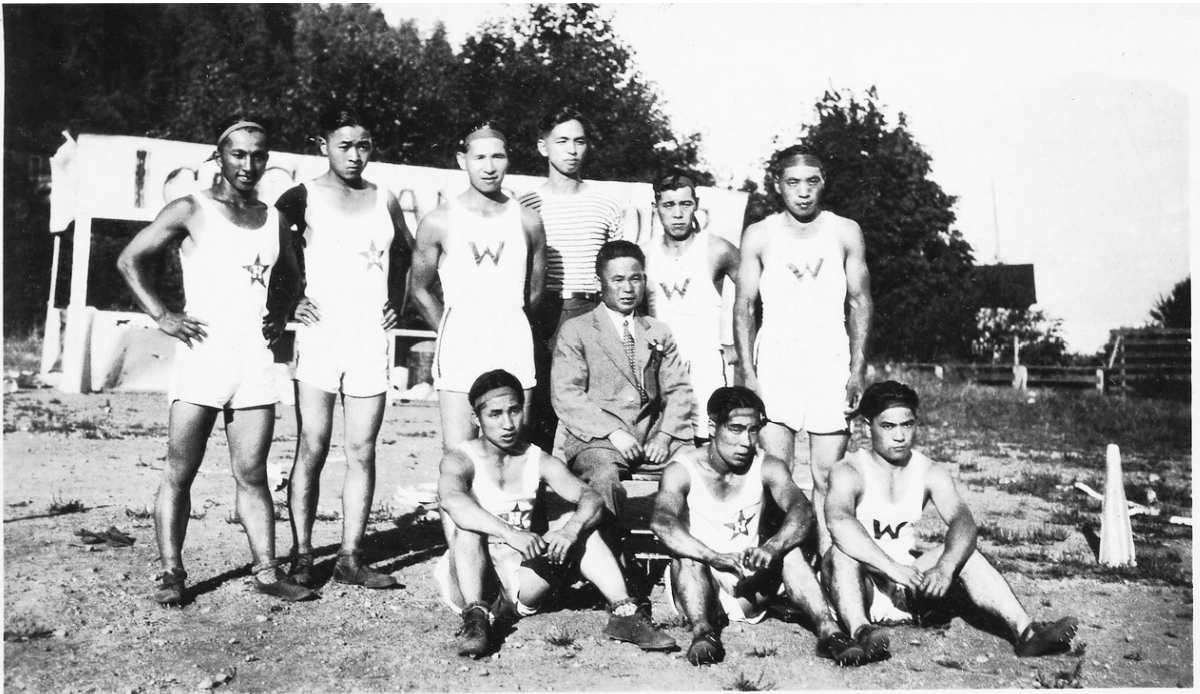
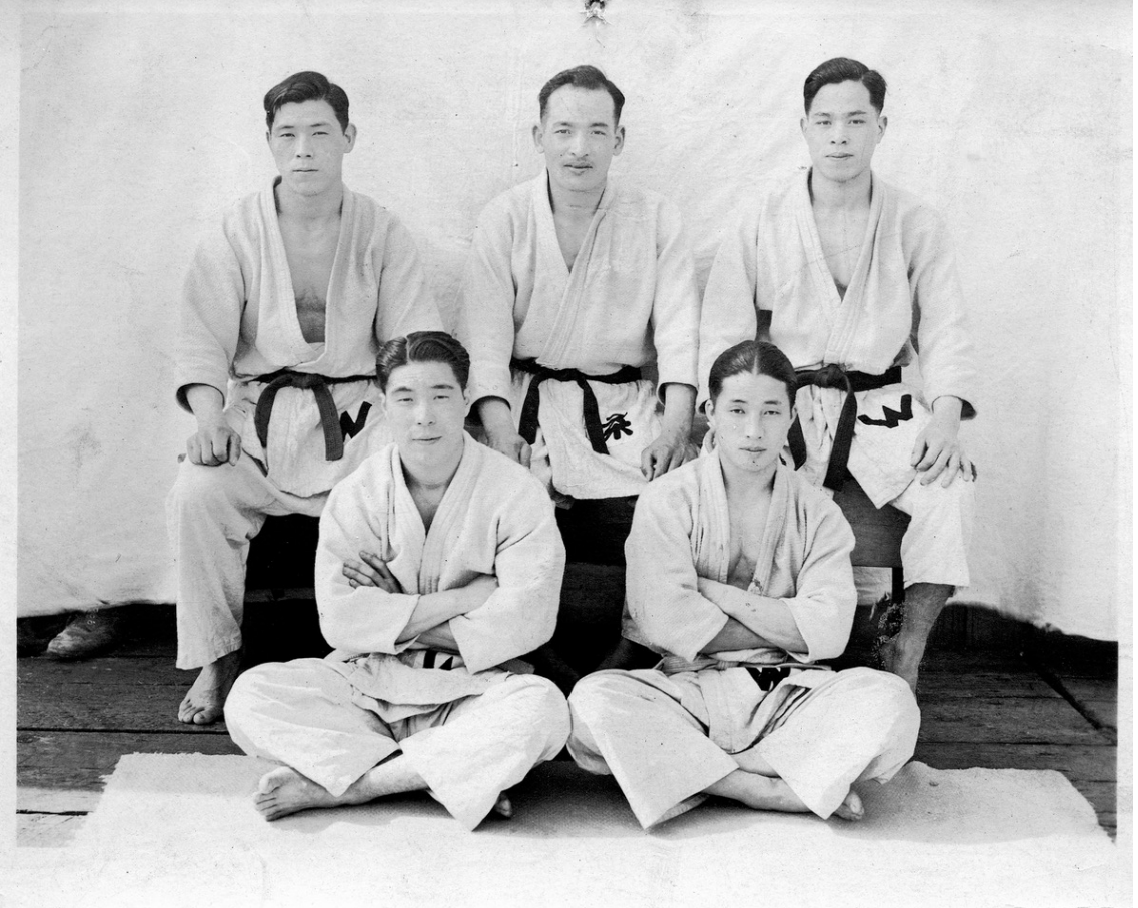
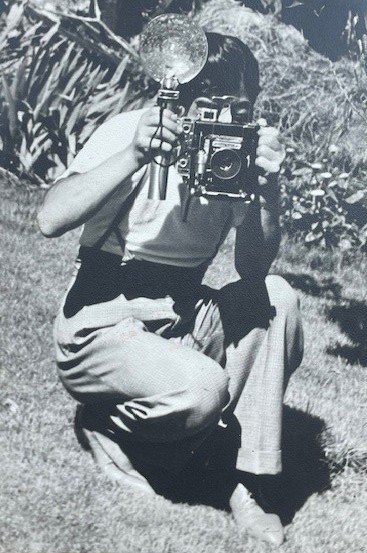
Jerry noticed that many people pursued hobbies in their time off. Woodfibre was known for its baseball team, and residents also took part in martial arts and swimming. Jerry chose photography.
He ordered his first Kodak folding camera and supplies from Kondo Drug Store in Vancouver and enrolled in a correspondence course with the American School of Photography in Chicago. Using his bunkhouse as a makeshift darkroom, Jerry learned to develop and print his own photographs, much of it through trial and error.

Prize winning artist
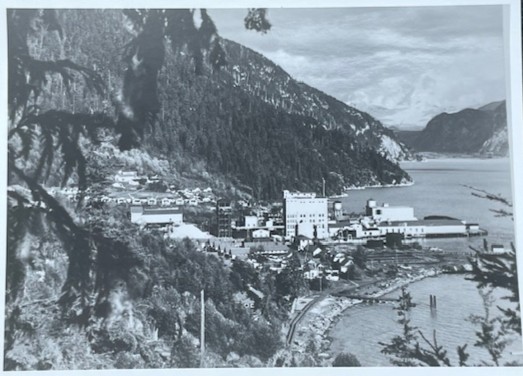
In 1938, Jerry noticed an announcement on the Japanese mess hall blackboard for a photography competition. On a rare day off, he hiked up the mountainside with his camera, climbed a tall tree and photographed Woodfibre surrounded by Howe Sound. He submitted the photograph and waited.
Days later, someone told him that his name was posted on the blackboard: he had won the competition and a $35 prize ($780.00 in today's currency). The experience gave Jerry confidence in his abilities and made him think that photography might become more than a hobby.
Life disrupted
In 1940, Jerry met Grace Hideko Kawano at a reunion between their fathers, who were close friends. Jerry and Grace married on November 1, 1941.
Only a few months later, their lives were upended by the forced removal of Canadians of Japanese descent from the West Coast.
In March 1942, Jerry and Grace left Woodfibre for Vancouver, where they stayed temporarily with Jerry’s sister on Powell Street. They were later sent by train with members of their family to Magrath, Alberta, where they worked on the Harris Farm harvesting sugar beets.
After two seasons on the sugar beet farm, Jerry and Grace moved to Lethbridge in 1943. Their son, Wataru, was born on October 31 of that year but died in infancy.
Around this time, Jerry learned that he had a heart condition and was advised to avoid strenuous physical work. The couple subsequently moved to Milk River, where Jerry found work in a restaurant.
A few months later, they moved again. A friend encouraged Jerry and Grace to come to Montreal, where he believed there would be better opportunities for Canadians of Japanese descent.
starting over
In 1944 Grace and Jerry moved to Montreal. He found work at different photography studios. In December of that year they had their daughter, Elaine Yoriko Ito, then a few years later another son Brian Minoru Ito. Then a couple of years later their family was complete with the addition of their youngest son David Kazuo Ito. In 1949 Jerry opened Ito studios then another studio in 1954 called Dante Studios. Jerry's success was due to his business skills; he was also the third partner in the Nikkei business, Urban Homes, building and construction. His photography skills were noteworthy, especially in colourizing black-and-white photos and in restoration. It seems his passion never left him; in 1970, when the family moved to Vancouver to retire, Jerry opened Ito’s Cameras and Gifts in 1971.
A life well lived
Jerry Ito died in 2013 at the age of 93. Grace died the following year at the age of 94.
Jerry’s story has been preserved through his family, particularly his daughter Elaine, who shared her father’s memories and helped ensure that his experiences at Woodfibre and throughout his life were recorded.