For many Canadians of Japanese descent who lived and worked on Bowen Island, the historical record is fragmentary. Sometimes we are fortunate to find a name in a document, a photograph, or a story preserved by a family member.
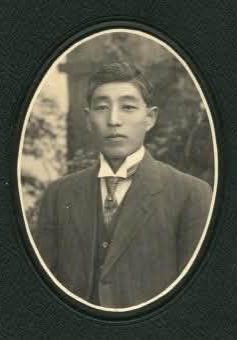
Daikichi Koga is one of those people. Much of his story might have disappeared had his son, Keido Uemon Koga, not written about his father and his work on Bowen Island. Those recollections, together with a small number of surviving records and photographs of the structures and landscapes Daikichi, his brother Shiro, and other Japanese workers helped create, allow us to piece together part of his life.
What survives is only a fragment, but it reveals how important Koga and the Japanese workers were to the development of Bowen Island's early tourism industry.
Building Bowen Island's Resort
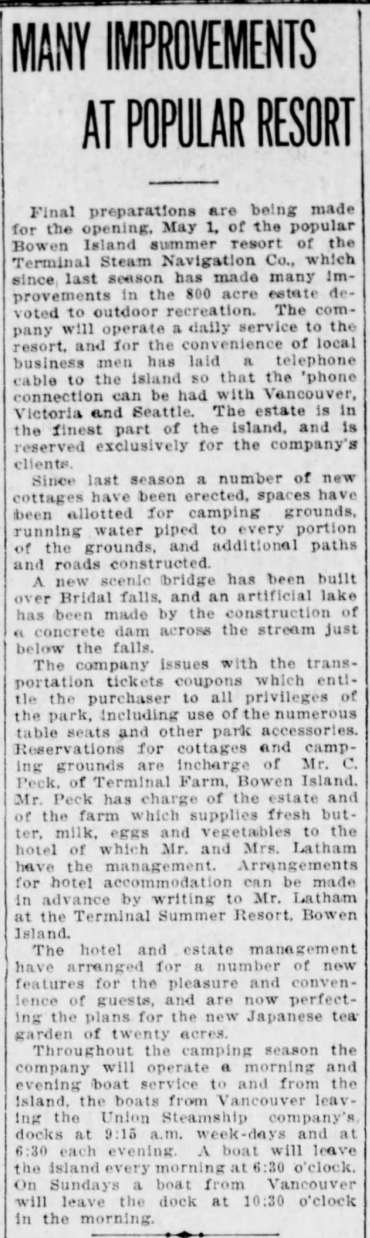
Daikichi Koga came to Canada in 1906 and soon found work with Captain John Cates and the Terminal Steam Navigation Company, which was developing Bowen Island as a summer resort.
Daikichi invited his brother Shiro Koga to join him. Together, the brothers helped supervise a crew of up to 25 Japanese workers who built and maintained the resort grounds and the systems that supplied the growing operation with water and power.
Daikichi became particularly important to the development and maintenance of the resort. His work encompassed gardening, carpentry, construction, water systems, and the supervision of other workers.
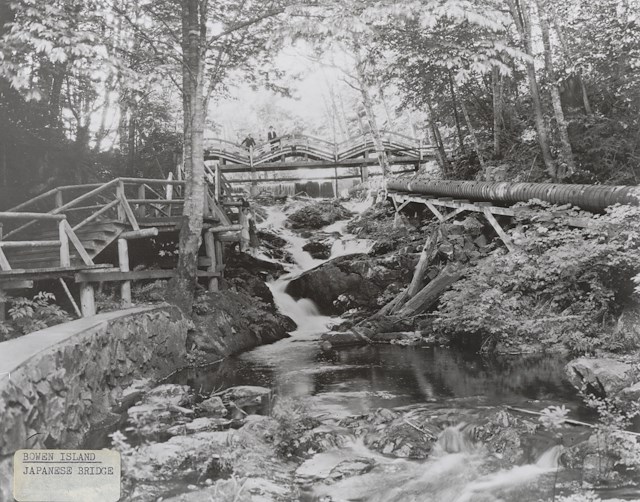
Under the Koga brothers' supervision, Japanese workers helped transform the area around Snug Cove. By 1912, their work included gardens, pathways, ponds, bridges, dams, water systems, and other infrastructure needed by the growing resort.
Among the best remembered features was the Japanese-style bridge near Bridal Falls, set within a landscaped area of gardens, ponds, and waterways. The dams and water systems also helped provide water and power for resort operations.
Together, these features became some of the most recognizable elements of Bowen Island's early resort landscape.
Family Life on Bowen
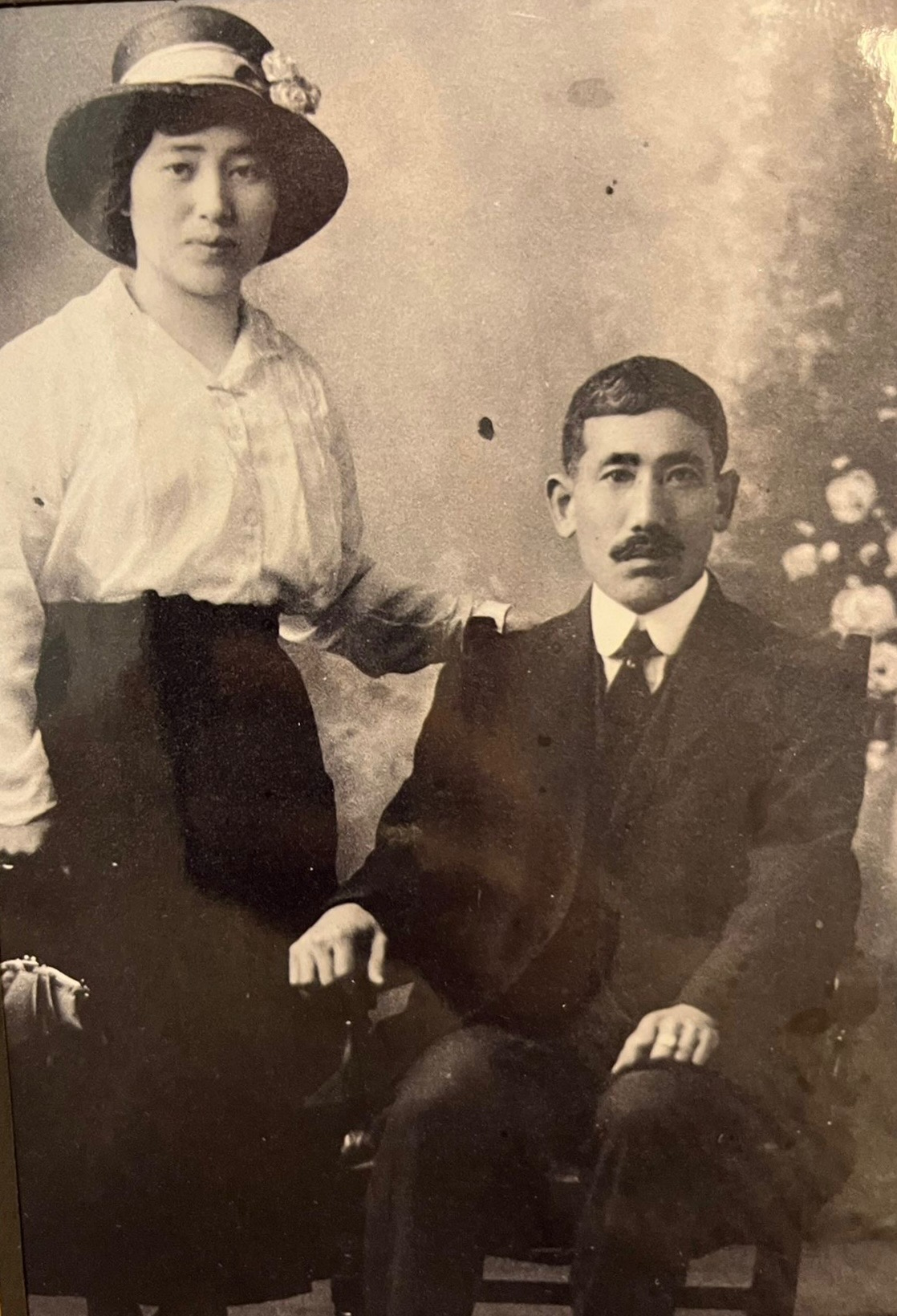
Daikichi's family also became part of the small Bowen Island community.
His sons included Tsuneichiro Koga, born in Japan in 1898, and Keido Uemon Koga, who came to Bowen Island as a young teenager and attended the island's one-room schoolhouse.
The surviving records provide only fragments of the family's life on Bowen. Even the name of Daikichi's wife has not yet been recovered.
What we do know becomes particularly valuable because Keido later wrote about his father and the work he had done on the island. He remembered being amazed by the range of his father's abilities:
“I often wondered how my father acquired all of his skill and knowledge; he was a wonderful carpenter and constructor, building many houses, engineer, in building dam, and power houses, then farming, pruning fruit trees, growing vegetables, grain and grass to feed the cattle and men.”
Keido also remembered his father laying pipes, maintaining water systems, supplying food for the workers, and performing the many practical jobs necessary to keep the operation running.
He concluded simply that his father had become “most indispensable” to the owner of the hotel.
The Resort Changes Hands
In 1920, the Terminal Steam Navigation Company's Bowen Island resort was purchased by the Union Steamship Company of British Columbia.
Daikichi appears to have remained connected with Bowen Island for many years afterward. Records indicate his presence on the island into the 1930s, although parts of his later life remain unclear.
Shiro's life took a different path. He eventually settled in Haney, where he became a farmer. His story provides another connection between the Koga family's early years on Bowen Island and the wider history of Canadians of Japanese descent in British Columbia.
The Next Generation
Daikichi's eldest son, Tsuneichiro, was born in Japan in 1898 and came to Canada as a teenager.
In 1926, he returned to Japan and came back to Canada the following year with his wife, Shige. The family later lived in Maple Ridge, where Tsuneichiro operated a berry farm.
In 1942, Tsuneichiro and his family were forcibly removed from Maple Ridge. Their farm was taken into government custody, and the family was relocated to Manitoba.
Remembering Daikichi Koga
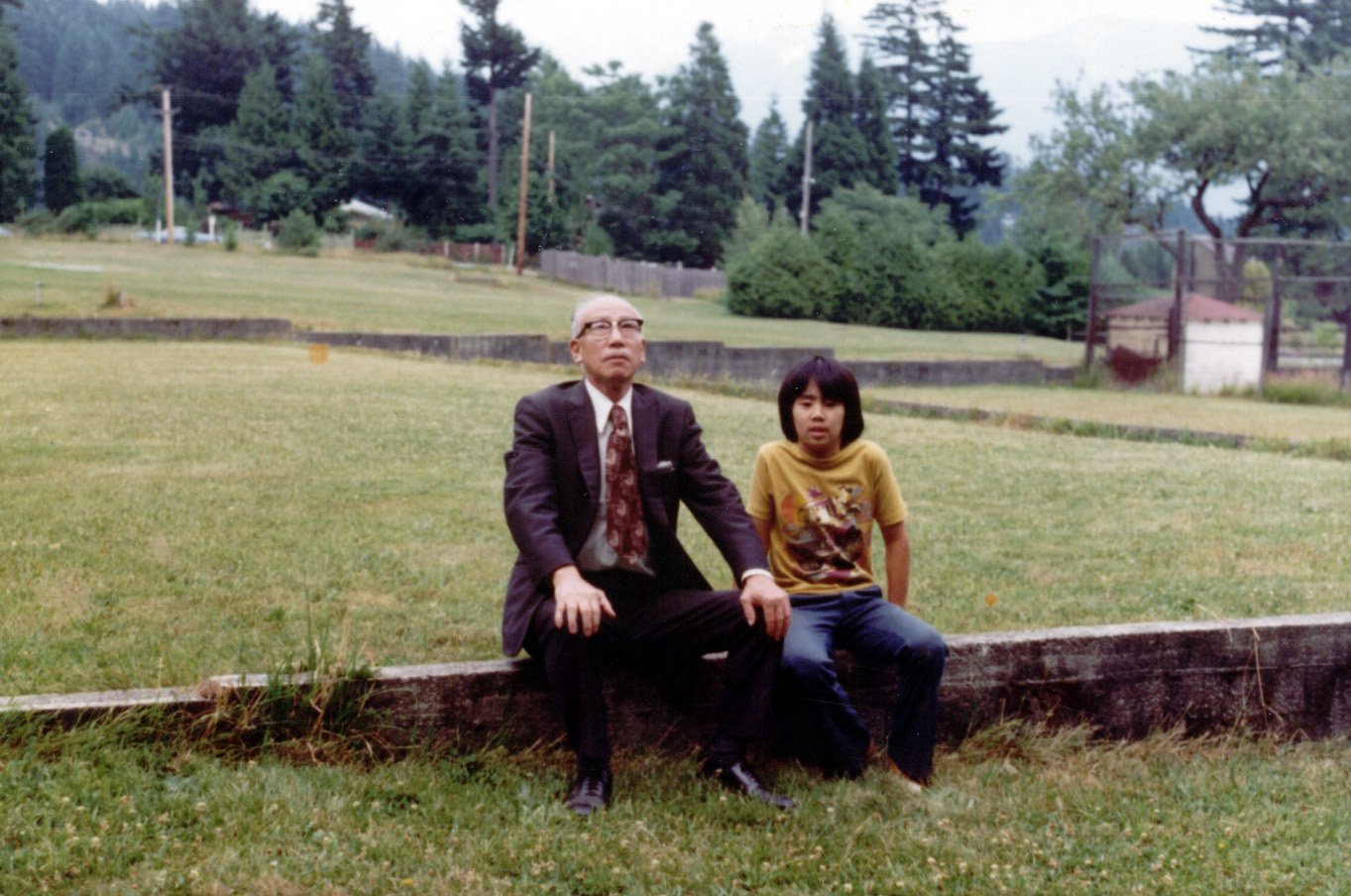
Daikichi Koga helped create a landscape that generations of visitors would associate with Bowen Island, yet relatively little about his life survives in the historical record.
His story was preserved in part because his son Keido recorded his memories and shared them with the Bowen Island Museum & Archives. Together with surviving photographs and records, these recollections help connect familiar features of Bowen's early resort with Daikichi, Shiro, and the Japanese workers who helped build them.
These fragments help restore their names and contributions to the history of Bowen Island.