Manzo Nagano Arrives in Canada
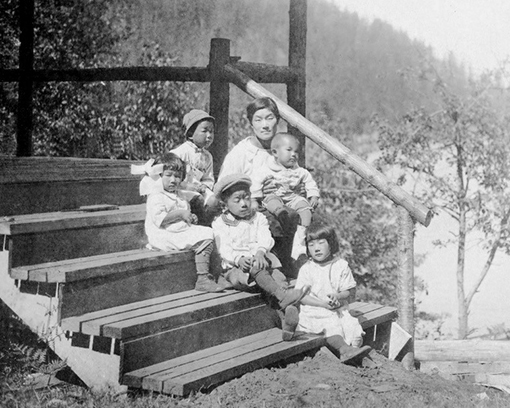
Manzo Nagano arrived in BC in 1877 and is recognized as the first Japanese person known to settle permanently in Canada, beginning Japanese settlement in British Columbia. Over the following decades, immigrants from Japan established lives and communities throughout the province, including in fishing, logging, mining and other industries.
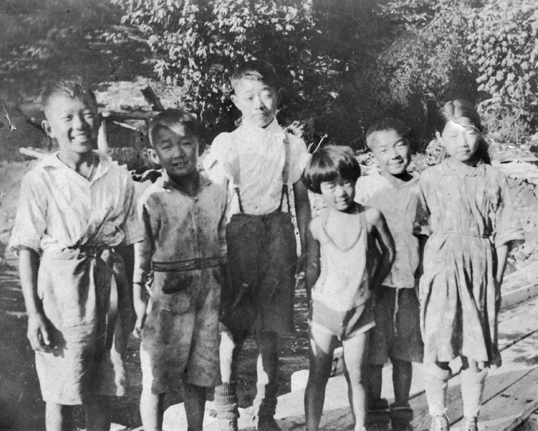
Photo: Manzo Nagano family; City of Victoria Archives, PR-0043-M07756
Learn more >
Japan Opens the Way for Emigration
In 1884, the Japanese government began allowing people from the labouring classes to emigrate abroad. Economic hardship and rapid social change in Meiji-era Japan encouraged some people to look overseas for work and opportunity. In the decades that followed, increasing numbers travelled to British Columbia, where many initially found work in fishing, logging, mining and other industries.
Learn more >
A Regular Route Across the Pacific
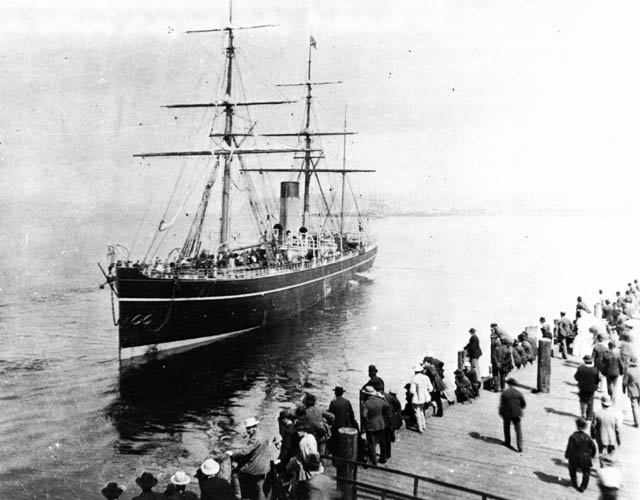
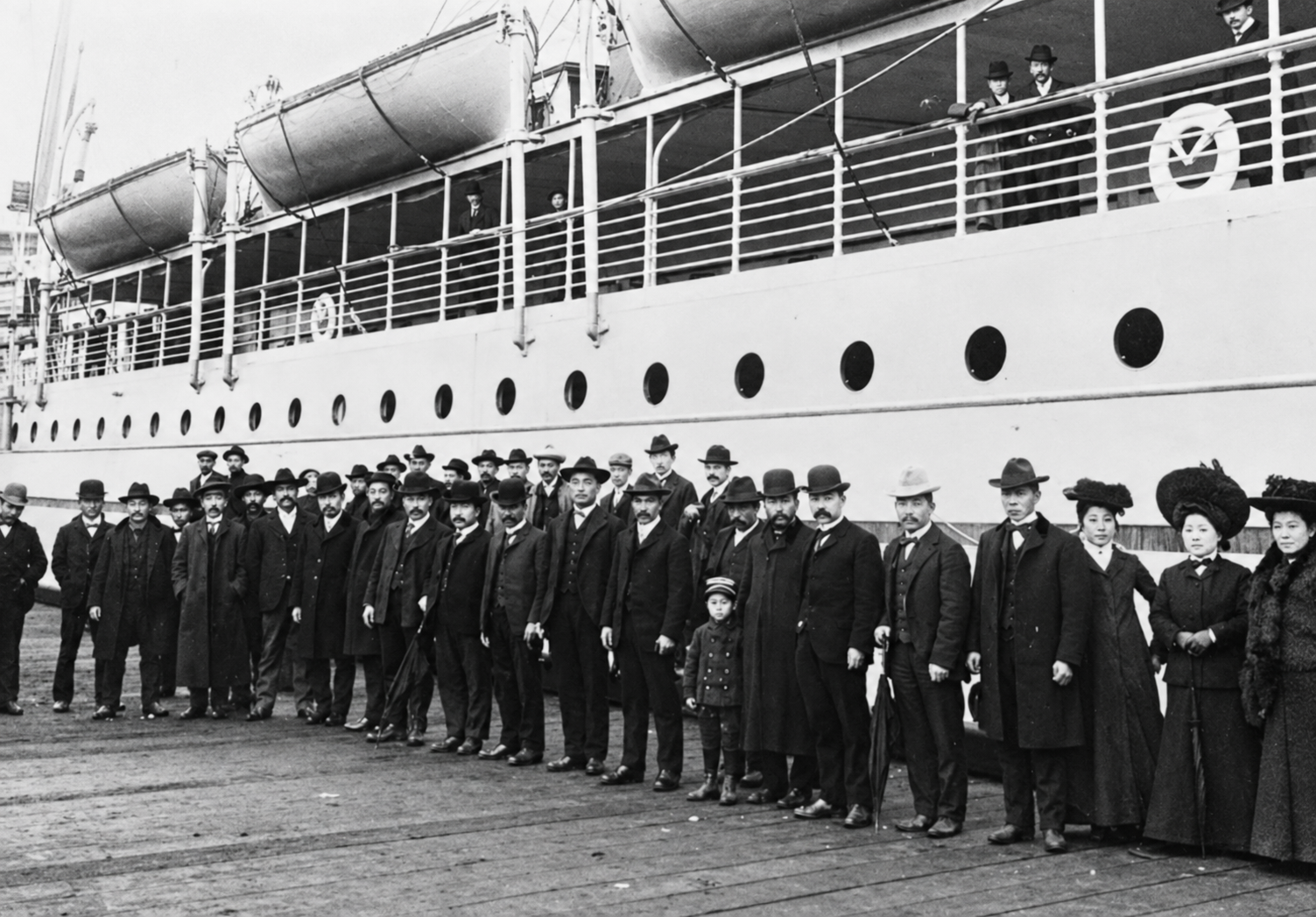
In 1887, regular steamship service began between Yokohama and Vancouver, making travel between Japan and British Columbia more accessible. The new connection contributed to increasing migration from Japan. Many early immigrants came seeking work and economic opportunities in British Columbia’s growing industries.
Photo: SS Abyssinia arriving at Vancouver, June 14, 1887
Learn more
Japanese Lose Voting Rights
In 1895, British Columbia amended the Provincial Voters’ Act to exclude Japanese residents from the provincial voters’ register, denying them the right to vote in provincial elections. The restriction applied regardless of British subject status and became part of a growing system of legal discrimination against people of Japanese descent in British Columbia.
Source: Provincial Voters’ Act Amendment Act, 1895
Learn more
Japanese Workers at Galbraith
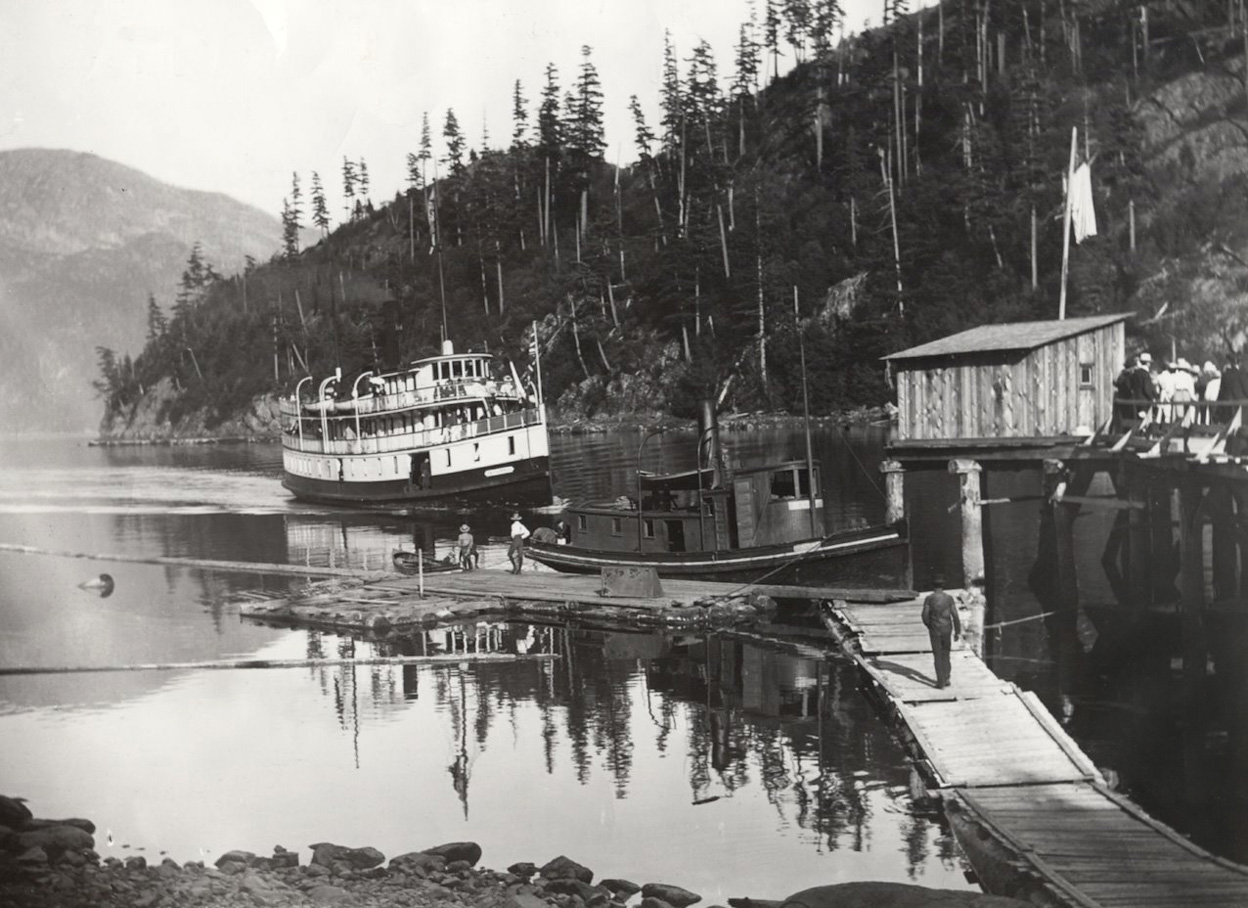
In 1899, Edward Galbraith pre-empted 55 acres at what became Galbraith Bay. His daughter Bessie later recalled that her father “hired some Japanese” who built a bunkhouse and cook shack. The workers remained for a year or two, cutting cedar into shingle bolts that were hauled to shore and loaded onto scows for Vancouver.
Learn more
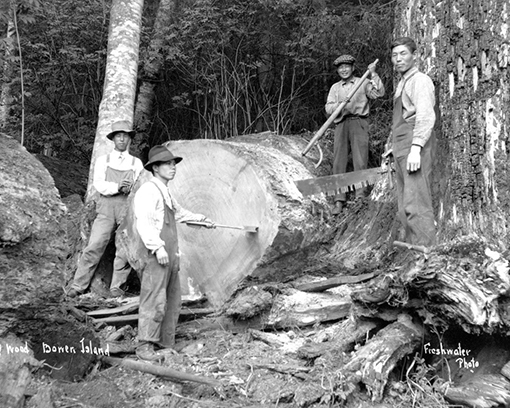
Japanese Loggers on Bowen
The 1901 Census records thirteen Japanese men living in two logging camps on Bowen Island, providing the earliest surviving names we have identified for Japanese residents on the island. Most were recorded as loggers. Their names appear to have been recorded phonetically by the census enumerator, so the historical spellings require careful interpretation. Source: Census of Canada, 1901
Learn more
Vancouver Anti-Asian Riot
On September 7, 1907, an anti-Asian demonstration in Vancouver developed into violence as a crowd moved through Chinatown and then into the Japanese neighbourhood around Powell Street, damaging businesses and homes. Japanese residents defended their community. The riot reflected the intense anti-Asian racism and exclusion that Japanese immigrants encountered in British Columbia.
Learn more
Japanese Immigration Restricted
In 1908, Canadian Minister of Labour Rodolphe Lemieux negotiated an agreement with Japanese Foreign Minister Tadasu Hayashi to restrict immigration from Japan. Under the Hayashi-Lemieux Agreement, Japan limited passports for male labourers and domestic servants to 400 annually. Returning residents and certain family members were exempt, contributing to the growth of Japanese Canadian families and communities. Source: Canada, House of Commons Debates, January 21, 1908, pp. 1609–1610.
Learn more
Immigration Restrictions Expand
Canada’s Immigration Act of 1910 expanded the federal government’s power to restrict immigration and deport people it considered inadmissible. That year, an Order-in-Council imposed an additional financial barrier on immigrants of “Asiatic origin,” requiring them to possess $200 on arrival, compared with $25 required of other immigrants. These measures added to the restrictions already limiting Japanese immigration. Source: Immigration Act, 1910, 9–10 Edward VII, Chapter 27.
Learn more
Japanese Canadians Enlist
Japanese Canadian men who volunteered for military service faced barriers to enlistment in British Columbia. In 1916, many travelled to Alberta, where they were accepted into Canadian Expeditionary Force units. Between 1916 and 1918, 222 Japanese Canadian soldiers served on the Western Front. Their wartime service later became central to veterans’ efforts to secure the right to vote.
Racism Discussed on Bowen
In June 1931, about forty students gathered on Bowen Island to study inter-racial relations around the Pacific. Rev. K. Shimizu of Vancouver spoke about the experiences of second-generation Japanese Canadians, including discrimination and questions of belonging. The meeting shows that racial prejudice and the place of Japanese Canadians in Canadian society were being openly debated on Bowen Island before the Second World War.
Source: Victoria Daily Times, June 19, 1931.
Learn more
Gakuyūkai Picnic on Bowen
Members of the Gakuyūkai gathered on Bowen Island for their annual picnic on June 21, 1931. The large group photograph captures young Canadians of Japanese descent enjoying Bowen as a place for recreation and community gatherings. It is part of a broader history of Japanese Canadian families and organizations visiting the island for picnics, outings and social events.
Photo: Gakuyūkai Annual Picnic, Bowen Island, June 21, 1931
JCCC Original Photographic Collection, 2001.15.24.
Learn more
Community Life at Woodfibre
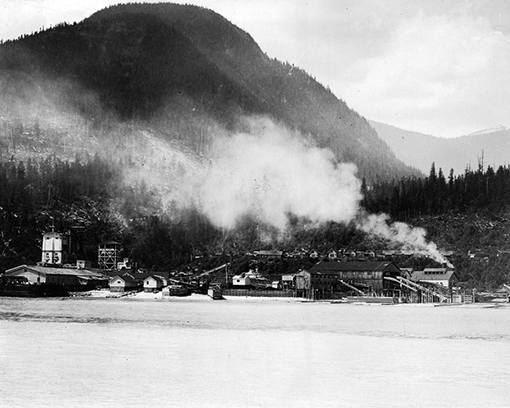
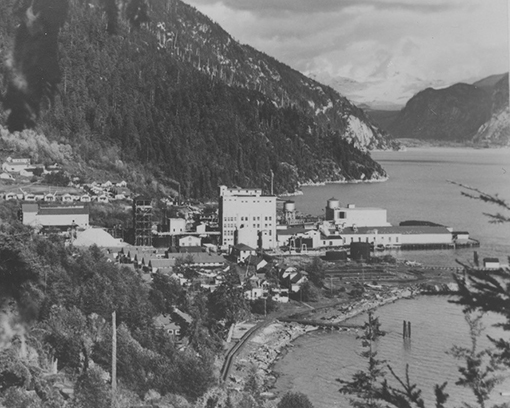
Japanese Canadians were an established part of the community at Woodfibre in Átl’ḵa7tsem / Howe Sound. Men worked at the pulp mill and other industries, while families built lives around the settlement. Photographs from the 1930s record community gatherings, sports and recreation, showing Woodfibre as a place where people lived as well as worked.
Learn more
Fishing Boats Confiscated
Following Canada’s declaration of war on Japan in December 1941, the federal government began imposing new restrictions on Canadians of Japanese descent. Japanese Canadian fishing boats were impounded along the B.C. coast, cutting fishermen off from their livelihoods. These measures marked the beginning of increasingly severe restrictions that would culminate in the mass forced removal from the coast in 1942.
Learn more
The Yamadas Forced from Bowen
In 1942, the Yamada family was forced from the home they had built at King Edward Bay. Kanichi and Masano Yamada and their children were sent first to Hastings Park in Vancouver and then to New Denver in the B.C. Interior. After nearly two decades on Bowen Island, the family would never again return to live on the island.
Learn more
Howe Sound Communities Uprooted
In May 1942, Canadians of Japanese descent were forcibly removed from Woodfibre and other Howe Sound communities. The New Canadian reported that the Union Steamship S.S. Lady Cynthia carried 250 people from Woodfibre to Vancouver. Families left behind homes, work and a community that had developed over decades along the industrial coast.
Image: The New Canadian, May 6, 1942
Learn more
Homes and Property Seized
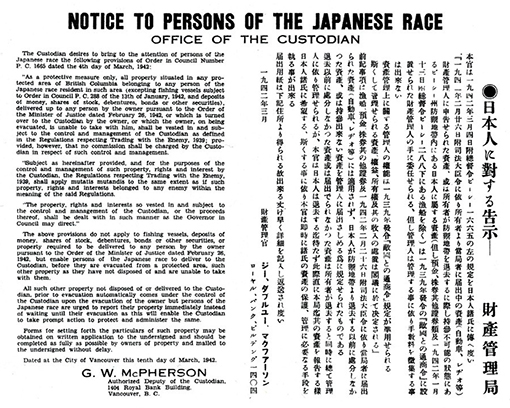
As Canadians of Japanese descent were forcibly removed from the B.C. coast, their homes, businesses, farms and other property were placed under the control of the federal Custodian of Enemy Property. Families were told their property would be protected. Instead, much of it was subsequently sold without their consent, making it extraordinarily difficult for people to return and rebuild their lives on the coast. Vehicles confiscated. CVA 1184-88
Learn more
Incarcerated in the Interior
After being forcibly removed from the coast, thousands of Canadians of Japanese descent were sent to government-controlled sites in the B.C. Interior. Families lived in hastily converted buildings and newly constructed shacks under restrictive conditions. Communities including New Denver, Slocan, Tashme, Kaslo and Greenwood became places where displaced families attempted to rebuild daily life. New Denver. Nikkei National Museum, 1995.139.1.4
Learn more
Property Sold Without Consent
In 1943, the federal government authorized the Custodian of Enemy Property to sell property belonging to Canadians of Japanese descent who had been forcibly removed from the coast. Homes, farms, businesses, vehicles and personal possessions were liquidated without their owners’ consent. The sales destroyed much of the economic foundation people had built before the war and made returning home increasingly difficult.
Learn more
Still Barred from the Coast
By 1944, the war was nearing its end, but Canadians of Japanese descent were still not allowed to return to the B.C. coast. Instead, the federal government encouraged families to move east of the Rockies and began planning for the removal of others to Japan. For families who had already lost their homes and communities, there was still no prospect of returning home.
Learn more
Opposition to Deportation
As the federal government pursued plans to deport Canadians of Japanese descent to Japan, opposition grew across Canada. Students and professors at the University of Saskatchewan protested the policy. Professor S. Mack Eastman argued that stripping Canadians of their nationality and deporting them because of their ancestry violated the principles of the new United Nations Charter.The Ottawa Citizen, December 4, 1945, p. 20.
Learn more
Deportation Orders Repealed
In January 1947, the federal government repealed the orders that provided for the deportation of Canadians of Japanese descent. Nearly 4,000 people had already been sent to Japan. Those who remained in Canada were still restricted from returning to the B.C. coast, and many families were now rebuilding their lives elsewhere in the country.
Learn more
Free to Return to the Coast
On April 1, 1949, the restrictions that had kept Canadians of Japanese descent from returning to the B.C. coast were finally gone. Seven years after the forced removal, people were free to return to communities they had once called home. But homes and property had been sold, families had been dispersed, and relatively few returned.
Learn more
Japanese Canadian Centennial
In 1977, Japanese Canadians marked one hundred years since Manzo Nagano’s arrival in British Columbia. Centennial events were held across Canada, bringing communities together to celebrate Japanese Canadian history, culture and contributions. The centennial also encouraged a new generation to examine the wartime uprooting and dispossession and helped create momentum for the redress movement that followed.
Learn more
Japanese Canadian Legacies
In 2022, the Province of British Columbia announced a $100-million commitment to Japanese Canadian legacy initiatives. Developed through consultation with Japanese Canadian communities, the initiatives support education, heritage, seniors’ health and wellness, community and culture, a monument and anti-racism work. The program is helping communities across British Columbia preserve and share Japanese Canadian history.
Learn more >